
Could Your Tree Fall? Warning Signs to Check Before Winter
Learn how arborists assess cracks, decay, root damage, leaning, and other defects to determine whether a tree poses a risk to your home or property.
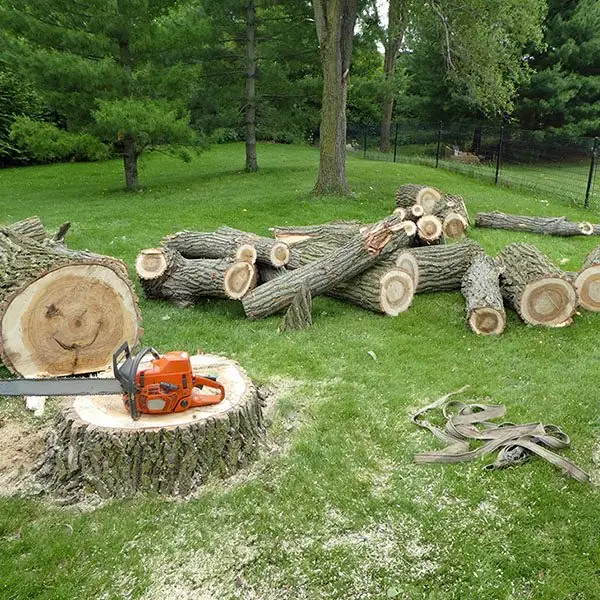
A tree that has stood for decades can still fail in a single storm. Most failures give some warning first, and the weeks before winter are a good time to look for it. This guide covers what to check and when to call an arborist.
Key Takeaways
- Cracks, large dead branches, and decay at the base are the most common warning signs.
- A tree that has recently begun to lean, with soil lifting at the roots, needs prompt attention.
- Mushrooms or fungus at the base often point to decay inside the trunk or roots.
- Only an in-person assessment can confirm whether a tree is a risk to your home or property.
Warning Signs a Tree May Fall
Walk around the tree and look at it from several angles, including the base, the trunk, and the canopy.
- Cracks and splits. Deep vertical cracks in the trunk or where large limbs join it can mean the wood is failing.
- Dead or hanging branches. Large dead limbs can drop without warning, and hung-up branches are especially risky.
- Decay and cavities. Hollow areas, soft wood, or fungus on the trunk can signal internal rot.
- A new or worsening lean. Heaved soil or cracked ground on the side opposite the lean is a serious sign.
- Root damage. Trenching, grade changes, or construction near the roots can weaken a tree for years.
What to Do If You Spot a Warning Sign
Keep people, vehicles, and play areas away from the tree until it has been assessed. Do not attempt to climb or cut a damaged tree yourself. Note what you see and when you first noticed it, and take a few photos to share with the arborist.
The right response depends on the tree, the damage, and what stands underneath it. Schedule a free assessment with our team to find out whether pruning, treatment, or tree removal is the right call.
When to Schedule an Assessment
Book an assessment if you notice any of the signs above, if a major storm has passed through, or if work has been done near the tree's roots. Assessments are carried out by an ISA Certified Arborist, who explains the findings directly and sets out the recommended work in writing.
Frequently Asked Questions
How do I know if my tree is dangerous?
Is a leaning tree always about to fall?
Can a damaged tree be saved?
What does an assessment cost?

Learn More With These Related Articles
Could Your Tree Fall? Warning Signs to Check Before Winter
October 1, 2026
Learn how arborists assess cracks, decay, root damage, leaning, and other defects to determine whether a tree poses a risk to your home or property.
Request a Free Estimate
Estimates are free, usually booked during your first call, and issued electronically for approval and payment.